SCIPPs Pixel Detector PCB (CERN)
High-Energy Physics Instrumentation
The Objective
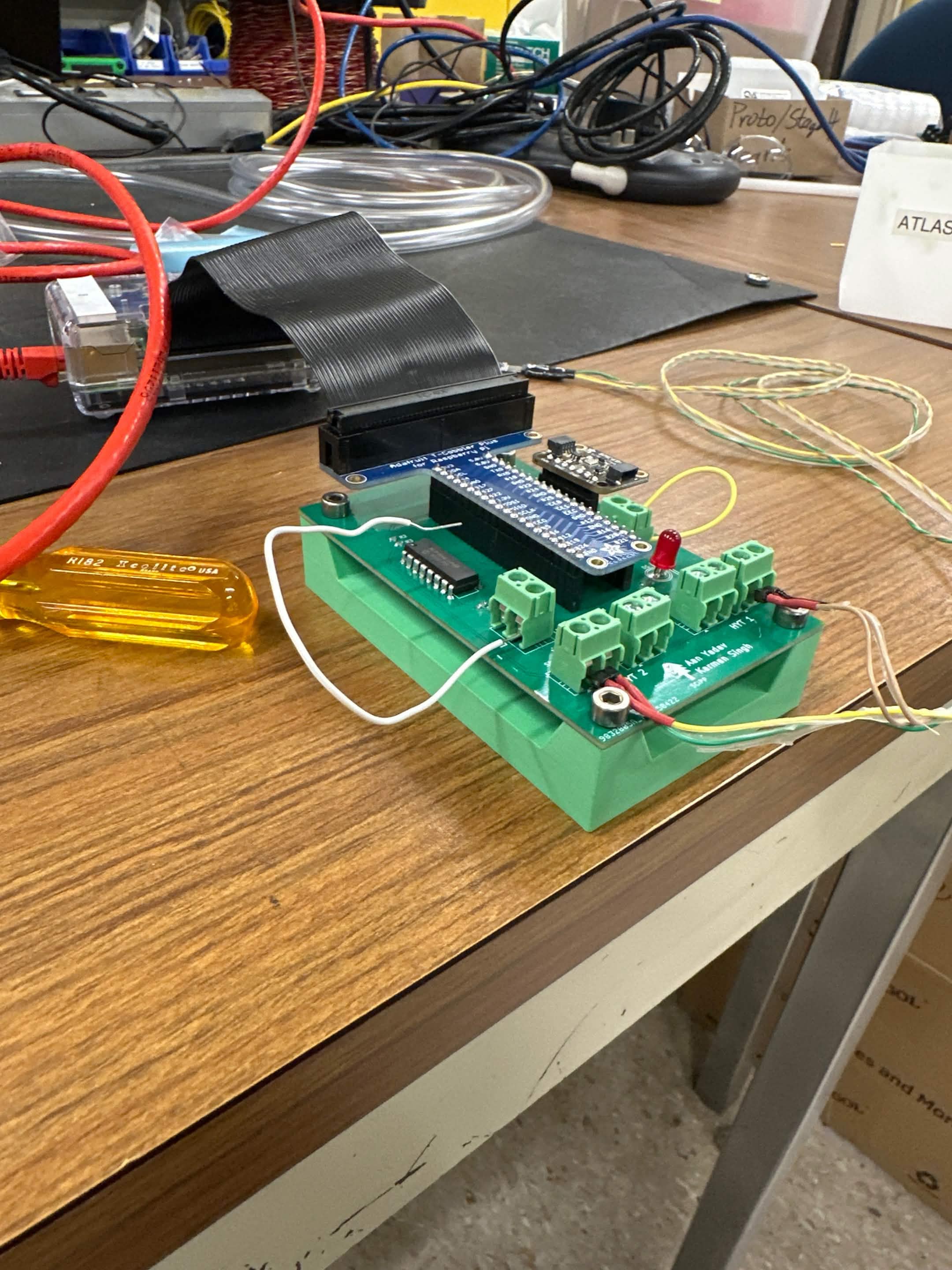
The Santa Cruz Institute for Particle Physics (SCIPP) develops pixel detectors for the ATLAS project at CERN. The team needed to transition their prototype designs into a reliable testing platform. I collaborated with another student (and my very good friend) to design, print, and validate the custom PCBs required for these physics applications. The project consisted of an atmosphere sensing module that sensed humidity, temperature, and pressure; it also had a lid sensor for detecting when the enclosure was opened or closed, as well as an analog-to-digital converter for reading the pixel detector. We also included an LED for debugging and mounting holes for the enclosure.
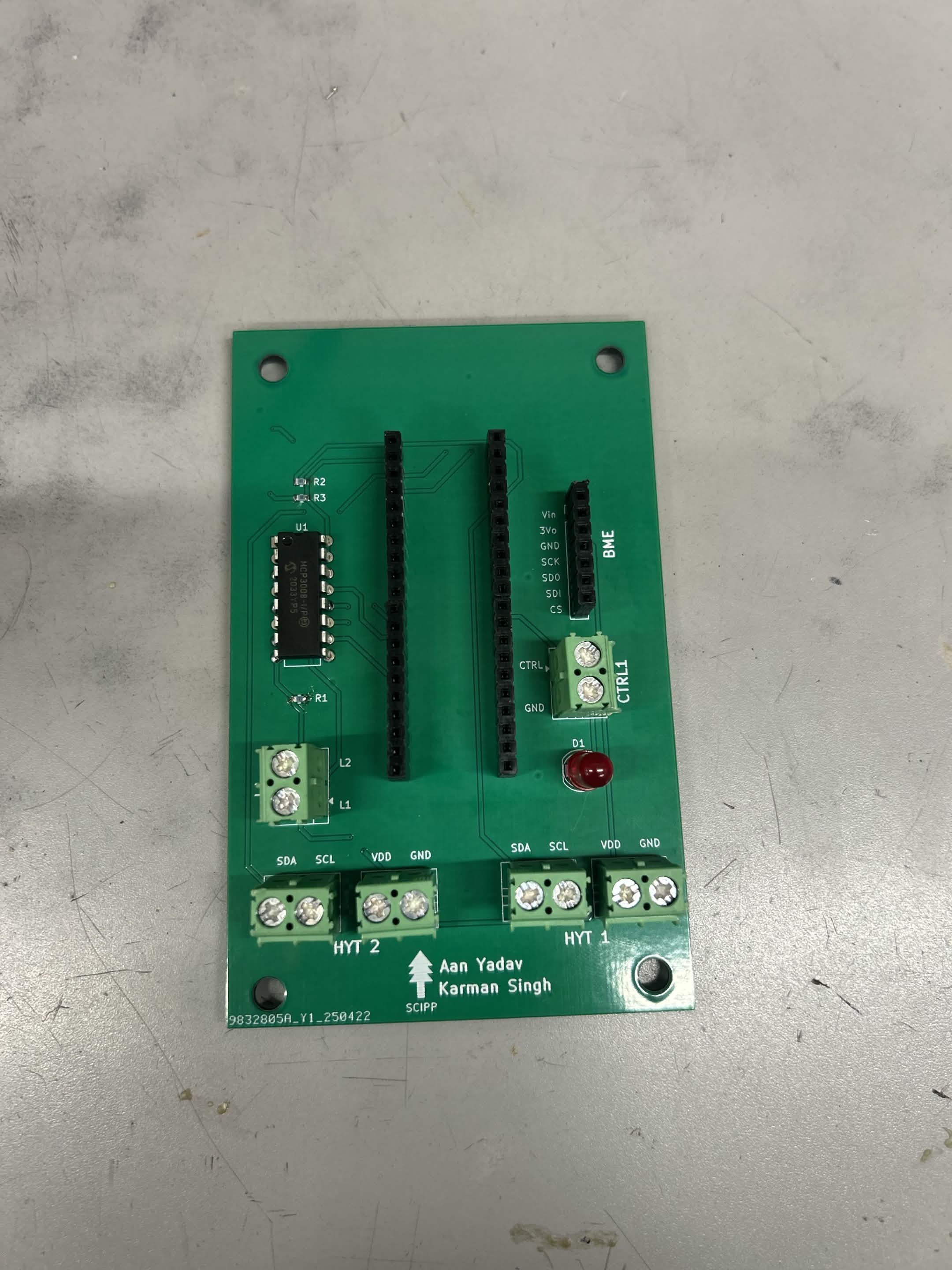
PCB Version
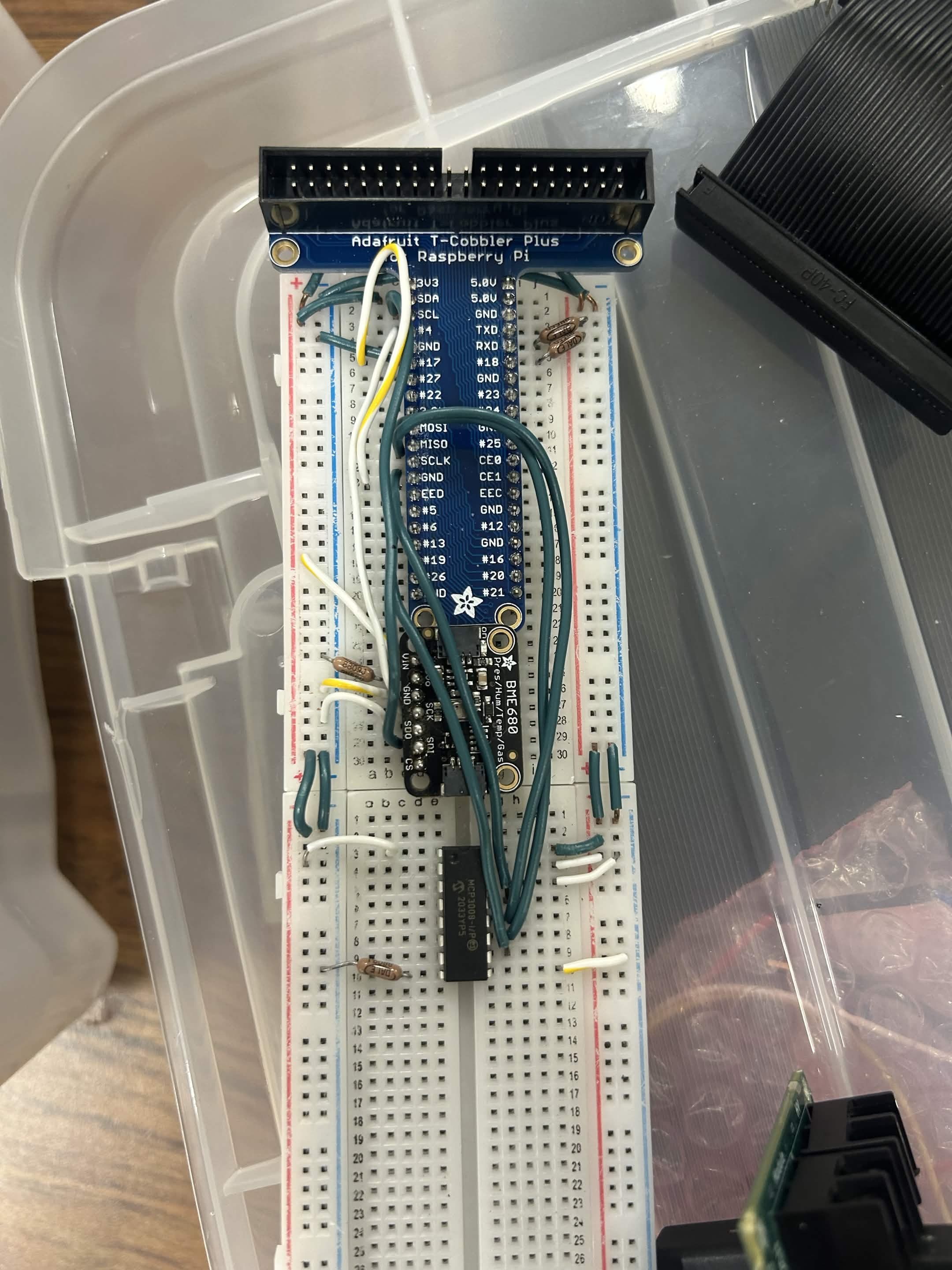
Breadboard Version
Architecture & Design
The design needed to be compact and reliable as a large concern was long-term usability. We had to also work with the Cobbler T for the Raspberry Pi as that was our existing interface between our electronics and compute. This was later adapted to remove the Cobbler T entirely and work directly with the Raspberry Pi GPIO pins.